The term black church refers to Protestant churches that currently or historically have ministered to predominantly African American congregations in the United States. While some black churches belong to predominantly African-American denominations, such as the African Methodist Episcopal Church, many black churches are members of predominantly white denominations, such as the United Church of Christ.
Black ministers in the Florida Panhandle served as the ultimate pillars of their communities during Jim Crow. Operating as the only institutions free from white oversight, they provided safe spaces, organized voter registration, and led protests, laying the groundwork for the broader Civil Rights Movement.
The Sanctuary of the Black Church
During an era of pervasive legal segregation, local churches were much more than places of worship.
Psychological Refuge: They offered a safe harbor where Black citizens could experience dignity and mutual support away from the degradations of Jim Crow.
Social and Economic Hubs: Because public facilities were restricted or nonexistent, ministers utilized their congregations to run social welfare programs, host community town halls, and distribute vital information.
Political Advocacy and Voter Drives
Ministers acted as the spokespeople and political leaders for their communities. This was particularly dangerous work in the Panhandle, where the Ku Klux Klan and local white power structures actively maintained segregation through intimidation and violence.
Voter Registration: Pastors frequently organized secret voter registration campaigns, encouraging Black residents to overcome poll taxes and literacy tests.
Speaking Truth to Power: By utilizing their pulpits, ministers mobilized crowds and spoke out against systemic inequality, often risking their livelihoods and their lives.
Organizing Direct Action (1950s–1960s)
Building on the foundation laid in the 1940s, ministers in the 1950s and 1960s expanded their tactics into direct, nonviolent action.
Boycotts and Sit-ins: Panhandle faith leaders joined statewide initiatives, partnering with organizations like the NAACP to organize bus boycotts and sit-ins against segregated lunch counters.
Regional Influence: Figures like the Rev. C.K. Steele extended their organizing influence across North Florida, coordinating freedom rides and pushing to desegregate municipal services.
The Local Impact
Throughout cities like Pensacola and Fort Walton Beach, churches such as Gregg Chapel AME Church and Beulah First Baptist Church expanded their ministries during these turbulent decades. By fiercely advocating for equal rights, Black ministers ensured that the fight against segregation remained an organized, unstoppable moral endeavor.
The Ft Walton Beach, FL (FWB) Black Churches have a long and noble history in relation to Black political actions and community services dating back at least to the late 19th century. Beulah First Baptist Church and Hollywood Church of God in Christ are the oldest African American Churches in Ft Walton Beach.
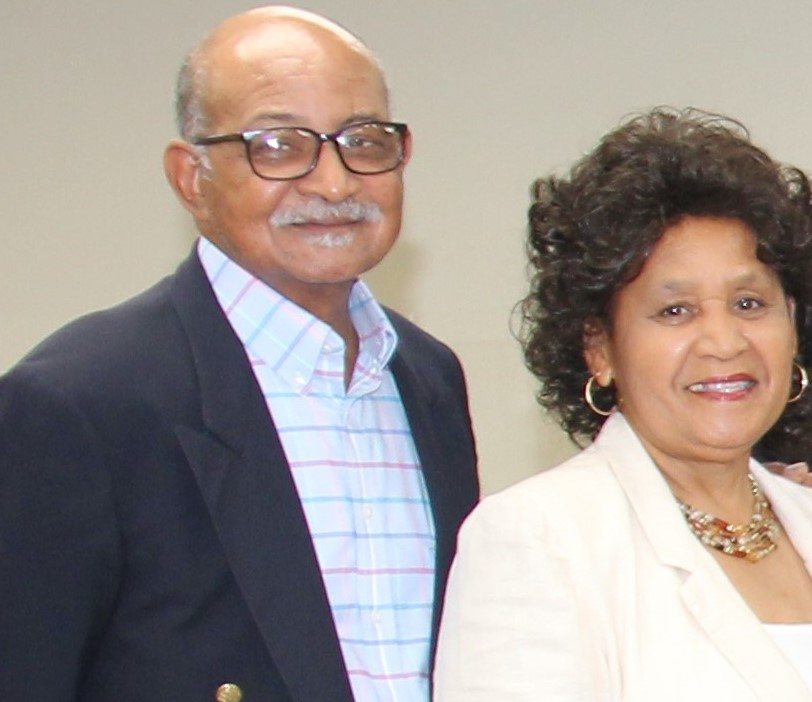
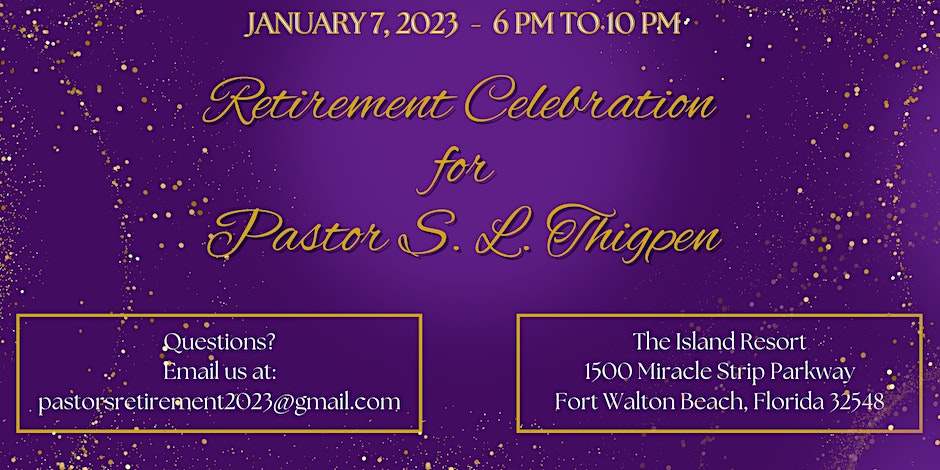
Pastor S. L. Thigpen and his wife Sis. Lois Thigpen gave tirelessly of themselves over 42 years of dedicated service to Beulah First Baptist Church. FWB Community members joined the Beulah First Baptist Church family to celebrate the Pastor’s retirement from the ministry on January 7, 2023.
Beulah First Baptist Church, currently lead by Rev. Felix L. Cole after the retirement of the past pastor Rev. S. L. Thigpen, has always been a church that has been at the center of African American leadership and progress in Ft Walton Beach Mid-town area.
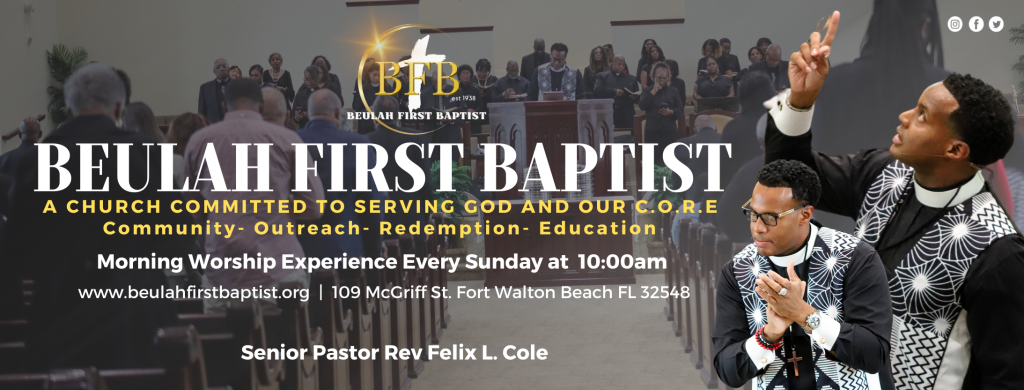
Buelah First Baptist Church had its beginning in 1933 in Camp Walton. There was no place of worship for black FWB citizens, so they met for church in their homes. Over time their numbers swelled and they needed house of worship. On donated land a small one room building was provided by the Oakridge Development Company and the John Brooks family. In 1938 the Community Baptist Church was founded. In 1946, the name was changed to Beulah First Baptist Church.
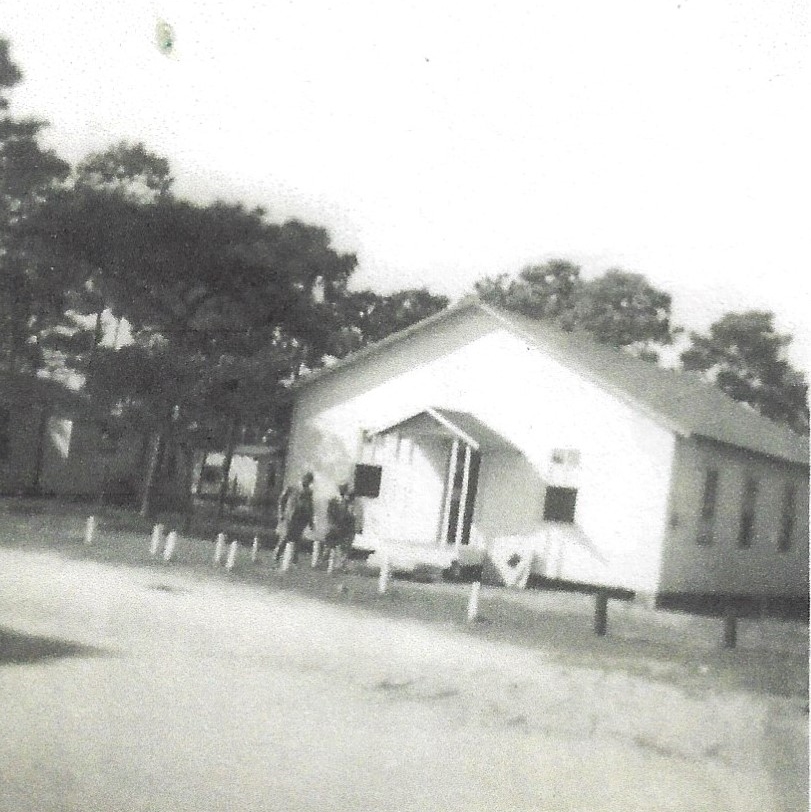
Church in the 1950’s (Donated Photo)


Both Gregg Chapel African Methodist Episcopal Church, currently lead by Rev. Cecil B. Williams, and Greater Peace Missionary Baptist Church, currently lead by Pastor Terrance Bugler, were founded during the early 1950’s.
Pastor Terrance Bugler immediate predecessor, the Rev. Clanston Seymore, who was the longest serving black pastor in Okaloosa County with 44 years at Greater Peace.
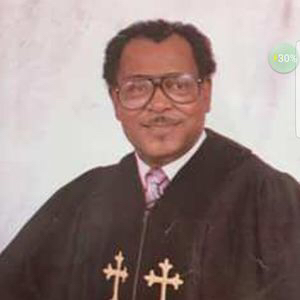
During the Jim Crow and Post Jim Crow periods all four churches have expanded or built new churches, acquired more land, expanded their church ministries and continue to play a very positive African American role in Ft Walton Beach, Florida. For many years there were four Black churches in the Ft Walton Beach African American community:
- Beulah First Baptist Church
109 McGriff Street NE
Ft Walton Beach, Florida 32548
Felix L. Cole, Pastor - Gregg Chapel African Methodist Episcopal Church
34 Carson Drive SE
Ft Walton Beach, Florida 32548
Cecil B. Williams, Pastor - Hollywood Church of God in Christ
122 Hollywood Blvd SE
Ft Walton Beach, Florida 32548
Dr Darnell E . Diggs , Pastor - Greater Peace Missionary Baptist Church
101 First Street SE,
Ft Walton Beach, Florida 32548
Terrence D. Bulger, Lead Pastor
Beulah First Baptist Church and Greater Peace Missionary Baptist Church are members of The Progressive Missionary Baptist Association of West Florida.
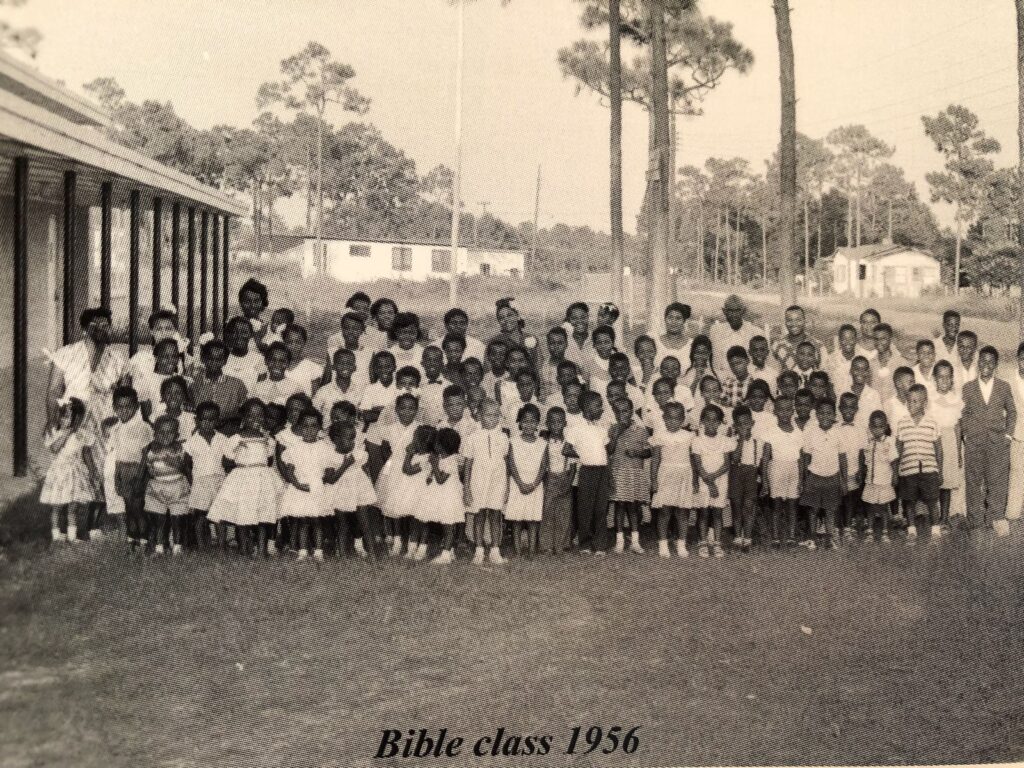
During the Jim Crow Period Vacation Bible School (VBS) was the major summer activity for African American children living in the Ft Walton Beach Mid-town area. The VBS was a summer program of Christian Education for African American children featuring religious study courses , arts and crafts, and recreation conducted by members of the Ft Walton Beach Mid-town African American Churches.